
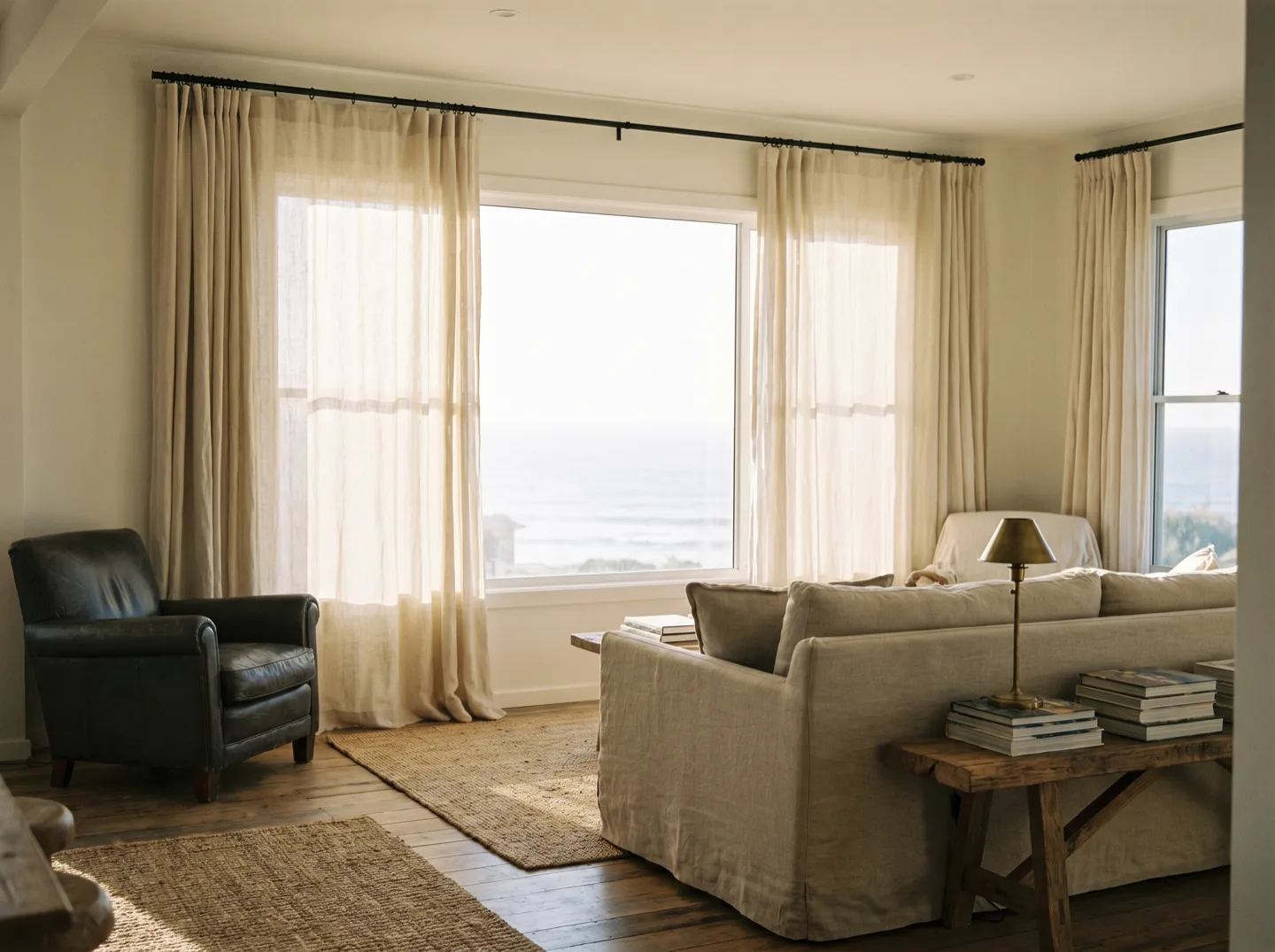
Sun, salt, and fabric
What coastal light does to a curtain
Merewether runs to detached family homes, renovated and generous with glass, and most of that glass faces a horizon with nothing between it and the sun. Three things follow:
- Glare is the day-one problem. A sheer with the right openness takes the squint out of a white-bright afternoon without closing the room down. This is S-fold territory, and it is most of what we hang here.
- UV is the year-five problem. Unlined natural fibres fade and rot faster in constant sun. We steer coastal rooms toward sun-stable weaves, protective linings, and colours that age gracefully rather than dramatically.
- Salt air touches everything, including hardware. Tracks and rods get picked with coastal fittings in mind, so the mechanism ages as well as the cloth.
None of this makes the choice harder for you. It just means the swatch stack we bring to a Merewether measure is not the one we would bring to a terrace in town.
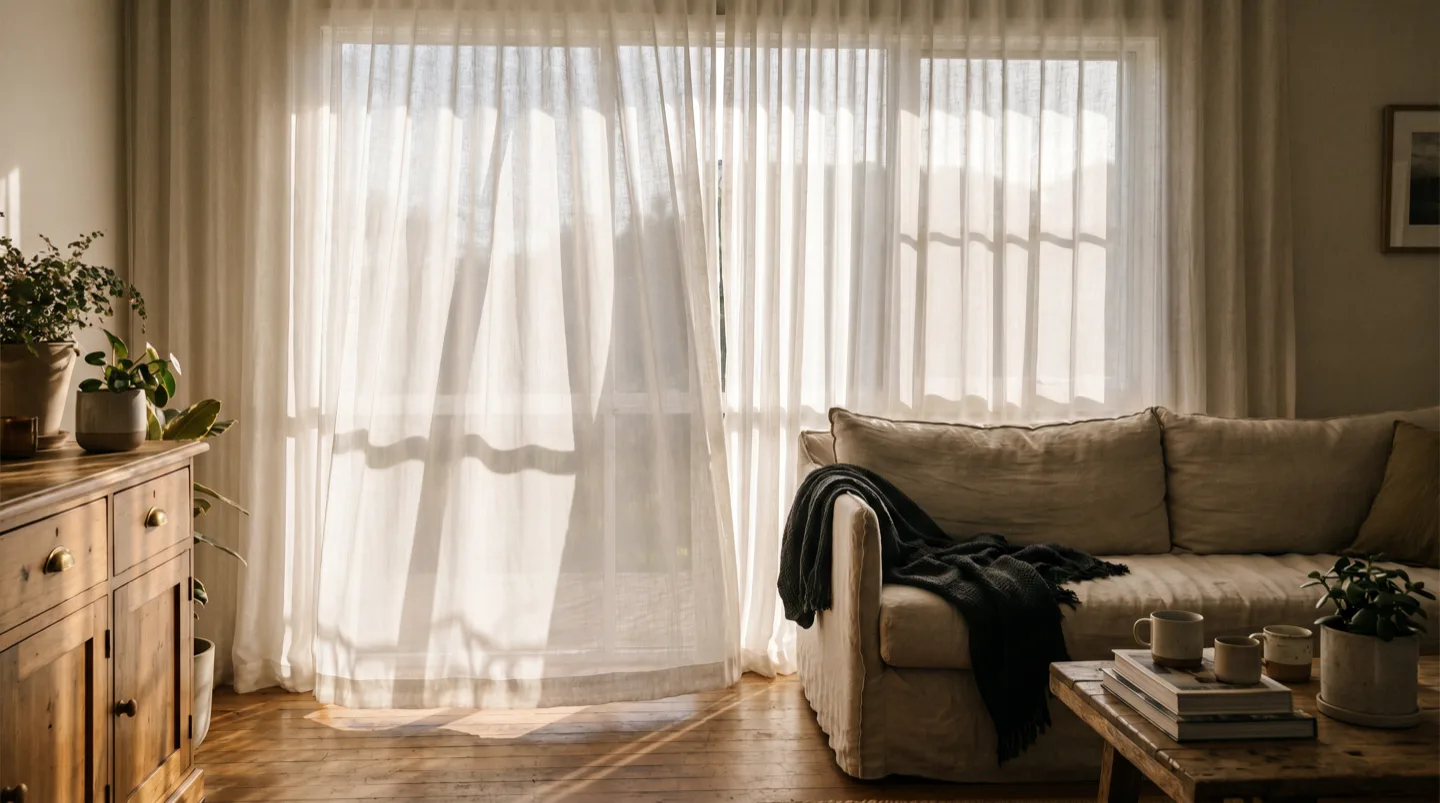
Room by room
The usual Merewether measure
- The living room with the view: sheer first, always, so the ocean stays part of the room. Where the westerly afternoon swings in, a lined layer on a double track keeps summer evenings comfortable.
- Bedrooms that face the sunrise: the surf might be worth waking for, but not at five. Blockout-lined drapes with a measured overlap give you the sleep-in the aspect took away.
- Kids' rooms: blockout for day sleeps, cord-free operation as standard practice, fabrics that shrug off being grabbed by sandy hands.
- The pool-side room: plenty of homes here live around a pool, and the room opening onto it wants an easy, washable weave rather than a precious one. We will say which is which with the swatches in your hand.
Bar Beach and the ocean-edge apartments get the same thinking one street closer to the spray; the same measure run covers both.
Choose the cloth for the light it will live in, and it will still look chosen in ten years.
Book a free measure in Merewether