
Home · Curtains · Sheers & S-fold
Sheers · S-fold · wave
Sheer curtains in Newcastle
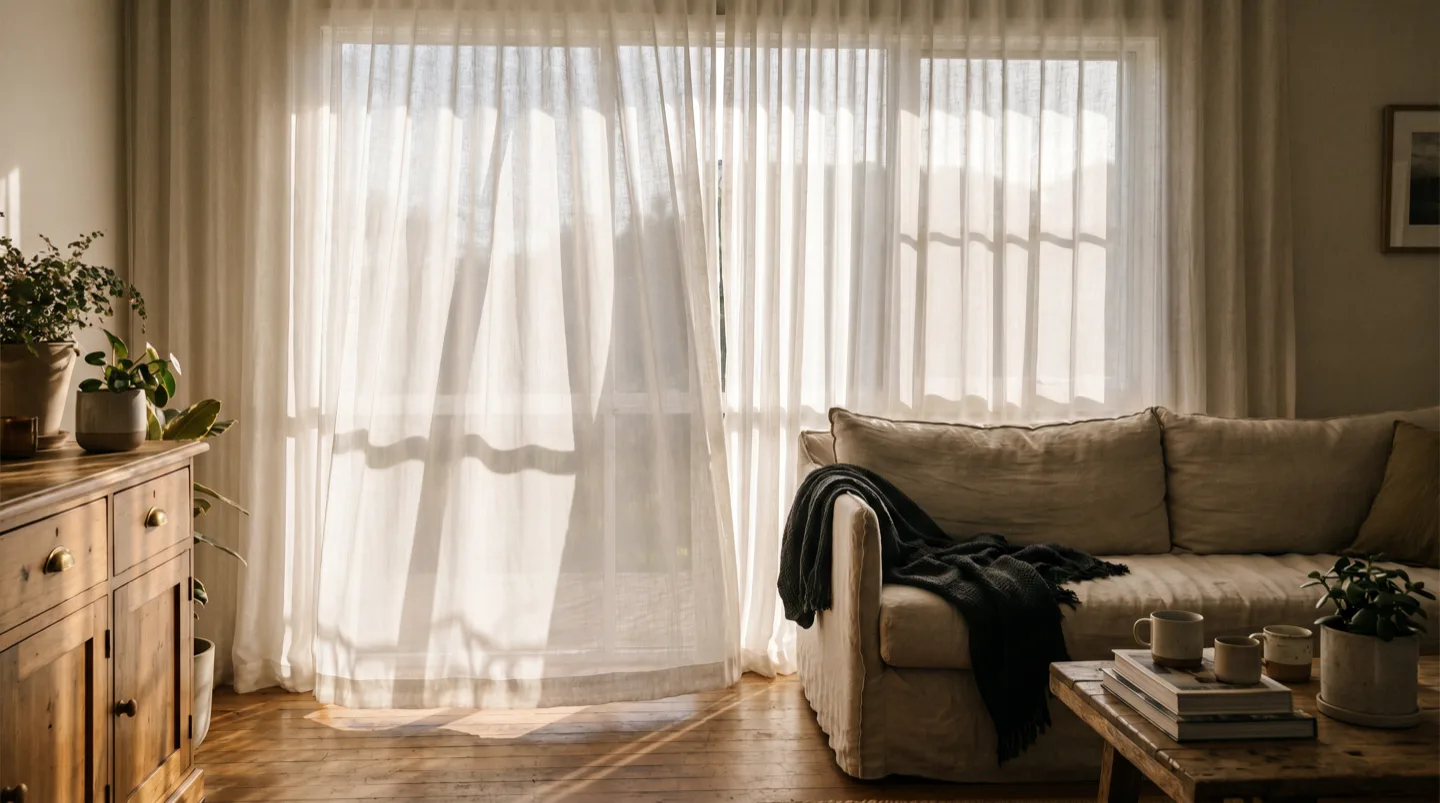
This city gets serious light: off the sea, off the harbour, low out of the west. A sheer does not fight it. It takes the glare out and leaves the light in, which is why half our work ends up being exactly this curtain.
The wave, done properly
S-fold is a system, not a look
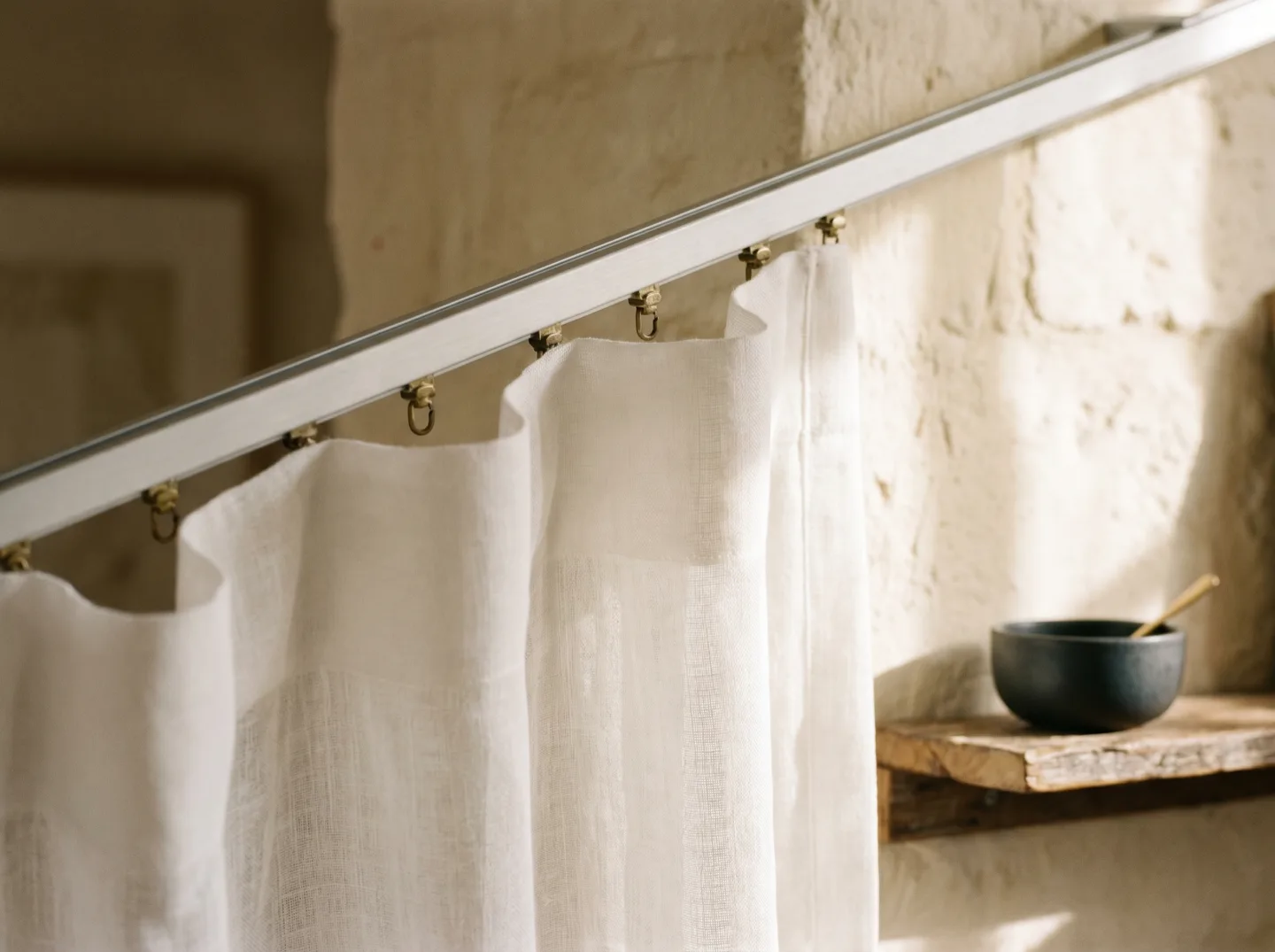
The even, continuous wave you have seen in every renovation photo is called S-fold (some makers say wave-fold; same idea). It only works when three numbers agree:
- Track spacing. The gliders are fixed at set intervals, and that spacing is what makes the folds run even instead of collapsing into random gathers.
- Fullness. S-fold wants roughly double the window's width in fabric. Skimp it and the wave flattens; overdo it and the stack gets fat.
- Stack-back. The folds have to live somewhere when the curtain is open. We plan the track so they stack past the frame and the glass comes clear.
Those numbers come from the measure, which is why an S-fold bought by guesswork so often disappoints. Made to the window, it is the calmest thing in the room.
Where sheers earn their keep
Three Newcastle rooms that want a sheer
The glare room
East light off the water, or a bright northern living room. A voile sheer drops the harshness and keeps the warmth. In homes near the beach we lean to easy-care weaves that handle sun without yellowing.
The view room
Harbour glass on The Hill, an ocean line at Merewether. Sheer keeps the view readable by day while taking the squint out of it, and stacks back off the glass entirely when the view is the point.
The watched room
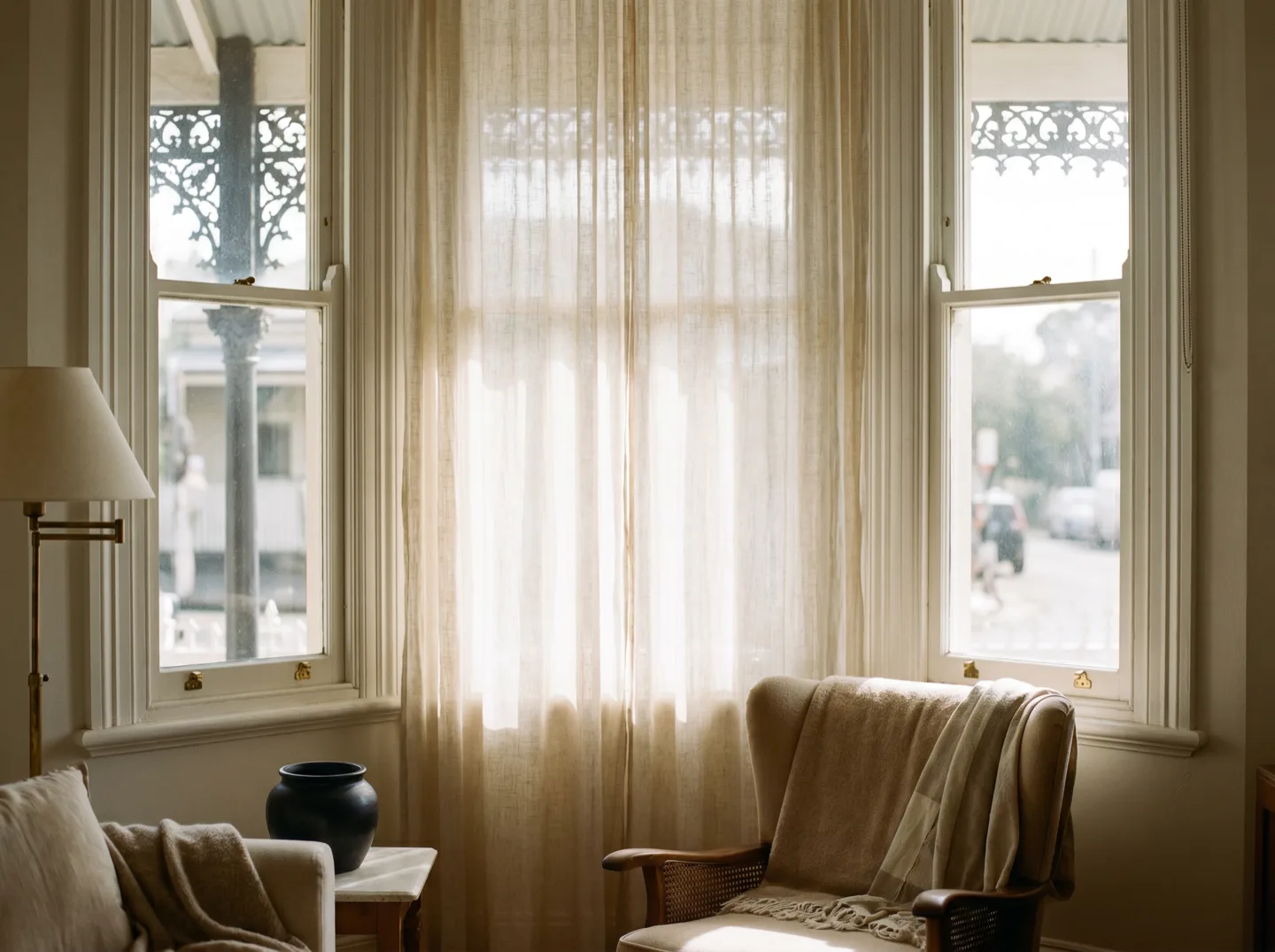
A terrace window on the footpath in Cooks Hill or Islington. By day a sheer lets you see out without being seen. After dark it reverses, so we usually pair it with a lined layer behind. That pairing has its own page.
Honest limits
What a sheer will not do
A sheer will not darken a bedroom, it will not insulate a cold room, and it will not keep the neighbours' eyes out at night once your lights are on. That is not a fault, it is the fabric doing what it is for.
When a room needs both moods, the answer is not a heavier sheer, it is a second layer: sheer against the glass, a blockout or thermal-lined curtain in front, both on one double track. The window changes character with the day.
Fabric-by-fabric detail lives in the weight and light guide.
A sheer is the difference between closing the blinds against the day and letting the day in on your terms.