
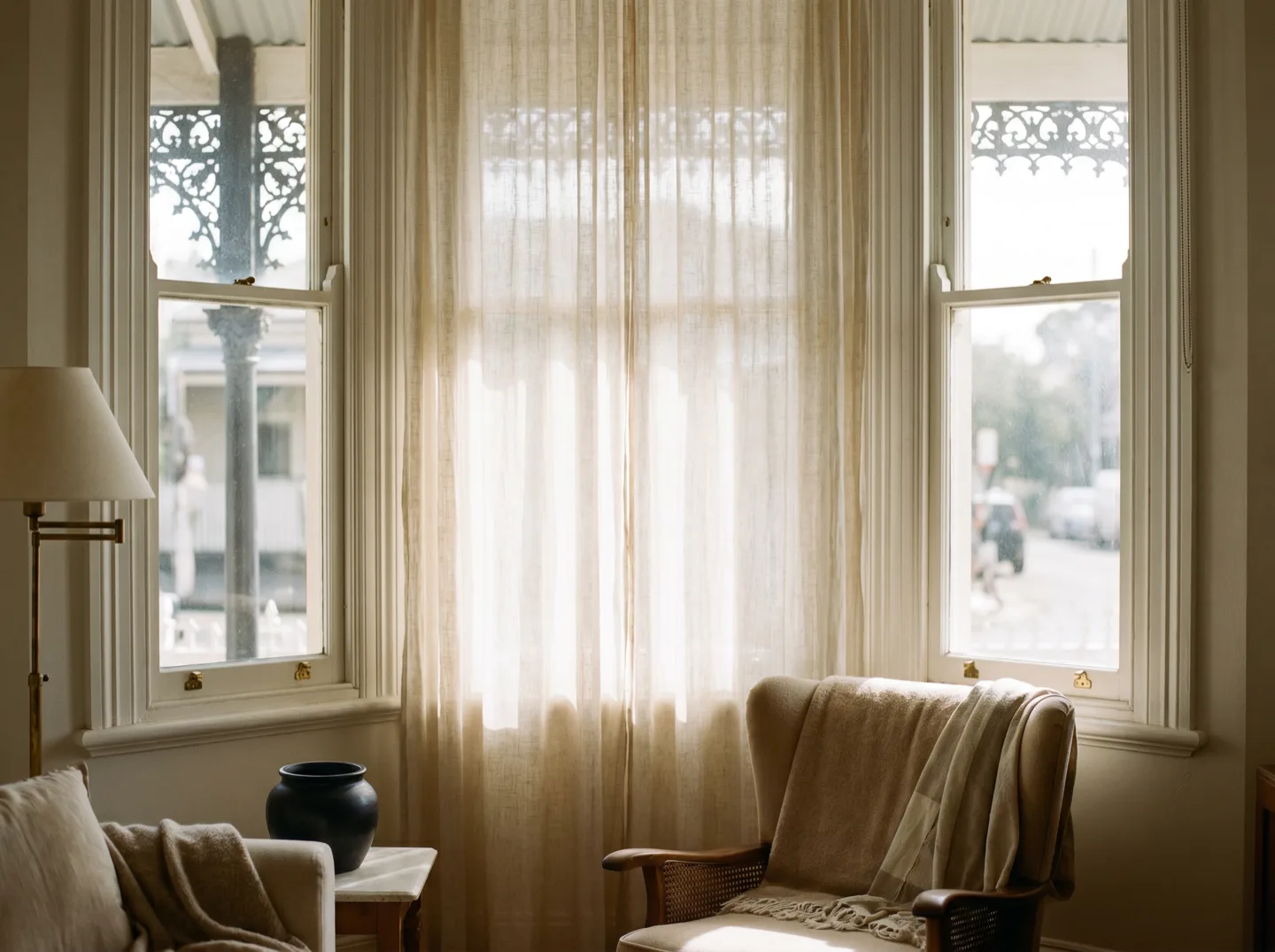
The window we measure most here
Anatomy of a terrace front room
Between Darby Street and the park the housing runs to Victorian and Federation terraces, and about half the suburb's homes are flats and conversions inside the same walls. The windows repeat, and so do their questions:
- Tall, narrow sashes that reward a floor-length curtain and punish a short one. The drop is everything; we measure it to the millimetre.
- The footpath a metre away. Daytime privacy without blacking out the room is the whole brief. A light-filter, or a sheer with a lined layer behind on a double track, is the standing answer.
- Heritage reveals and cornices that do not love brackets. We pick fixings at the measure, and where the cornice is precious a ceiling-fixed track or a rod on the architrave keeps the plaster honest.
- Renters and owners in the same terrace row. Where holes are off the table we will say plainly what can and cannot be done before anything is ordered.
What we would bring to the measure
The Cooks Hill swatch stack
Every home is its own conversation, but the fabrics that keep winning in these streets are:
- Sheers with body: an open weave with enough weight to fall straight in a tall window, S-fold on a slim track where the room is modern inside its old shell.
- Light-filters in stone and calico tones that flatter plaster walls and hold their colour against a north-facing street.
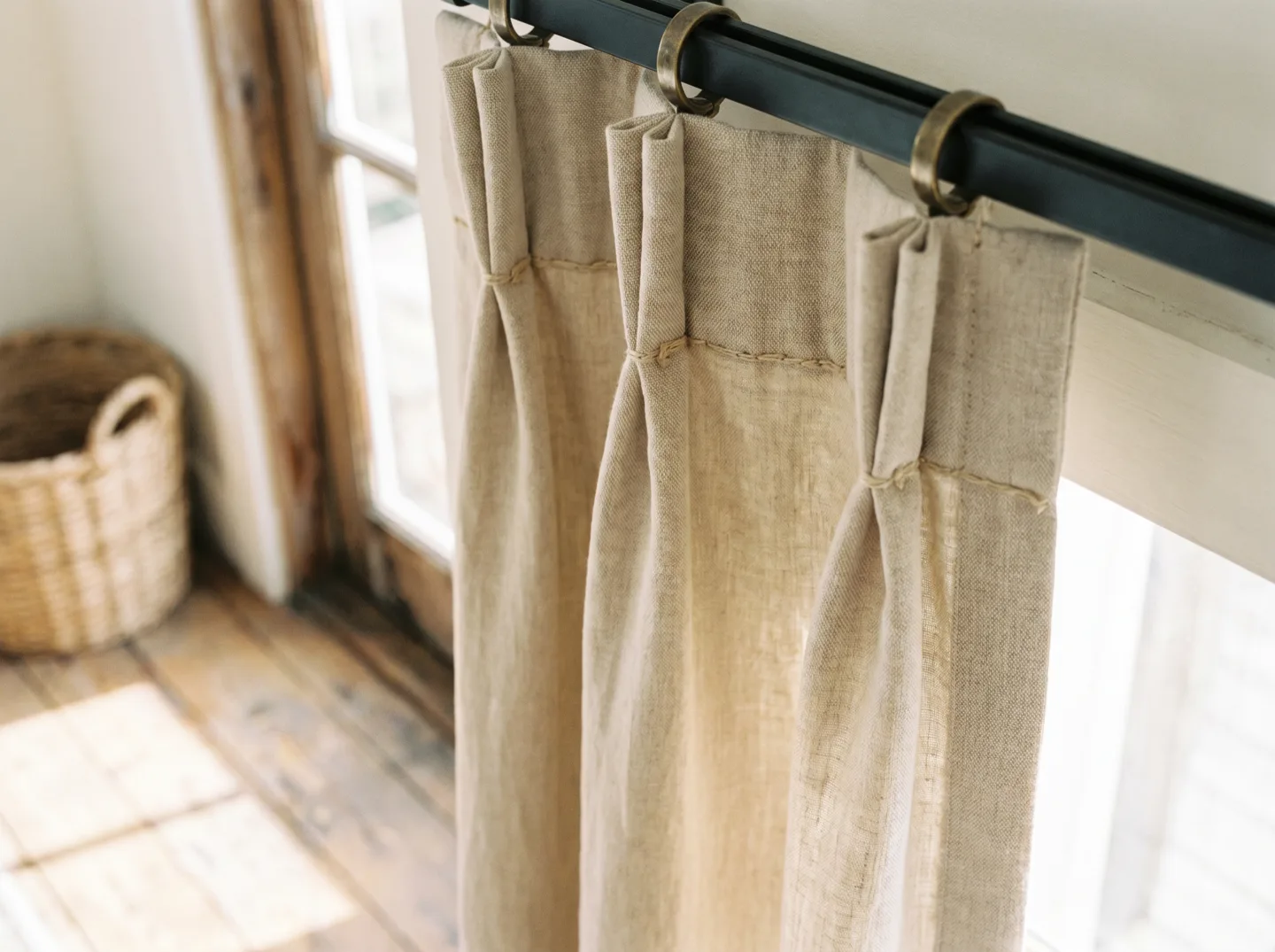
- Pinch pleat drapes where the room keeps its period manners; the structured heading suits a lofty terrace ceiling like nothing else.
- Blockout linings in the bedrooms upstairs, because street lamps do not have a bedtime.
If you want to arrive at the measure already fluent, ten minutes in the Fold & Fall Planner will do it, and the heading styles guide covers the vocabulary.
A terrace window should feel like it is wearing something made for it, because it is.
Book a free measure in Cooks Hill