
Tracks: the invisible worker
A track is a slim channel, usually aluminium, that the curtain runs along on gliders. It hides behind the heading or a pelmet and simply works.
- The only home of the S-fold. The wave is made by glider spacing, so if you want that fall, you want a track.
- Ceiling-fix or wall-fix. Ceiling fixing lets the curtain run floor-to-ceiling and makes windows read taller; wall fixing suits deep architraves and heritage plaster we would rather not touch.
- Bendable. Tracks curve around bay windows and corners; rods mostly do not.
- Operation. Hand-drawn, cord-drawn, wand, or motorised. In homes with young children we favour wands and cord-free operation, and any corded track is fitted and labelled to the mandatory safety standard.
Rods: the visible one
A rod (the trade also says pole) is hardware you are meant to see: timber or metal, finished with finials at each end, carrying the curtain on rings or through eyelets.
- The only home of the eyelet. Rings need a rod; the rod is part of the styling, so its finish matters as much as the fabric.
- Character hardware. A black steel rod reads industrial; aged brass reads warm; timber reads coastal. It is jewellery for the window, chosen at the measure with the swatches.
- Limits, honestly. Rods suit lighter operation and straighter runs. For heavy lined drapes drawn twice a day, or wide spans, a track wears better.
The unsung hero
Pelmets: not just trim
A pelmet is the box or fascia that closes off the top of the window over the track. The old site of this trade treats it as decoration. It is, but that is its second job.
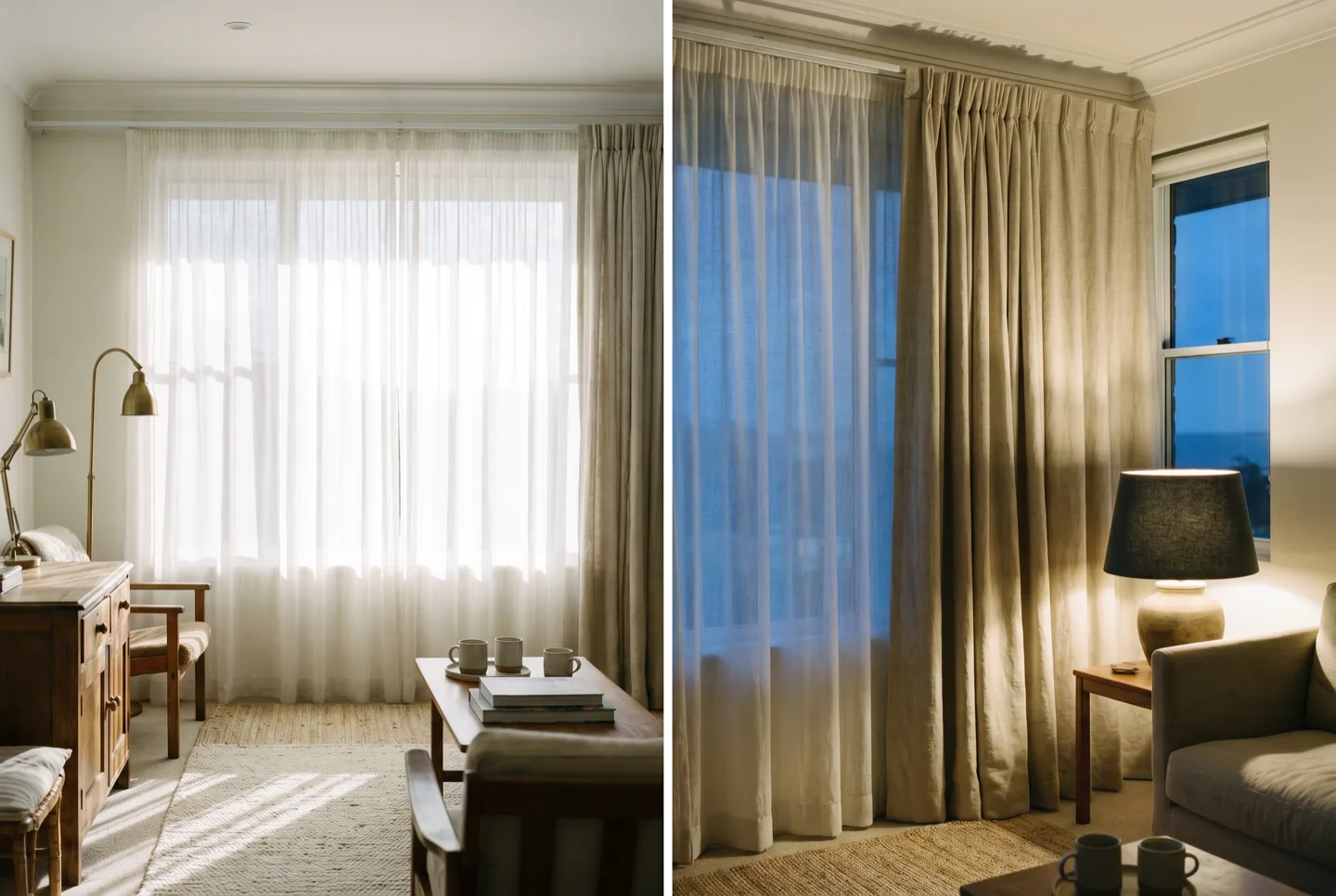
Its first job is thermal. In winter, room air cools against the glass and slides down behind the curtain, pulling warm air in at the top to replace it: a slow conveyor of heat loss running behind your fabric. A pelmet caps that circulation. The Australian Government's YourHome guidance names the combination outright: close-fitting, floor-length curtains with pelmets are what make window insulation work.
So we suggest pelmets where they earn their keep: over thermal-lined drapes in cold rooms, over pencil pleat headings that like being capped, and in renovations chasing comfort as much as looks. And we skip them where they do not, because a pelmet over an eyelet rod is a contradiction in terms.
Safety, in writing
Cords, wands and small children
Corded window coverings, curtain tracks included, fall under Australia's mandatory safety standard: loose cords must not form a loop a child can reach at or below 1,600 mm from the floor, cords are kept taut with a cleat or cord guide fitted at least 1,600 mm up, and the installer attaches a label with their details. That is how we fit every corded product, as a matter of course rather than a selling point.
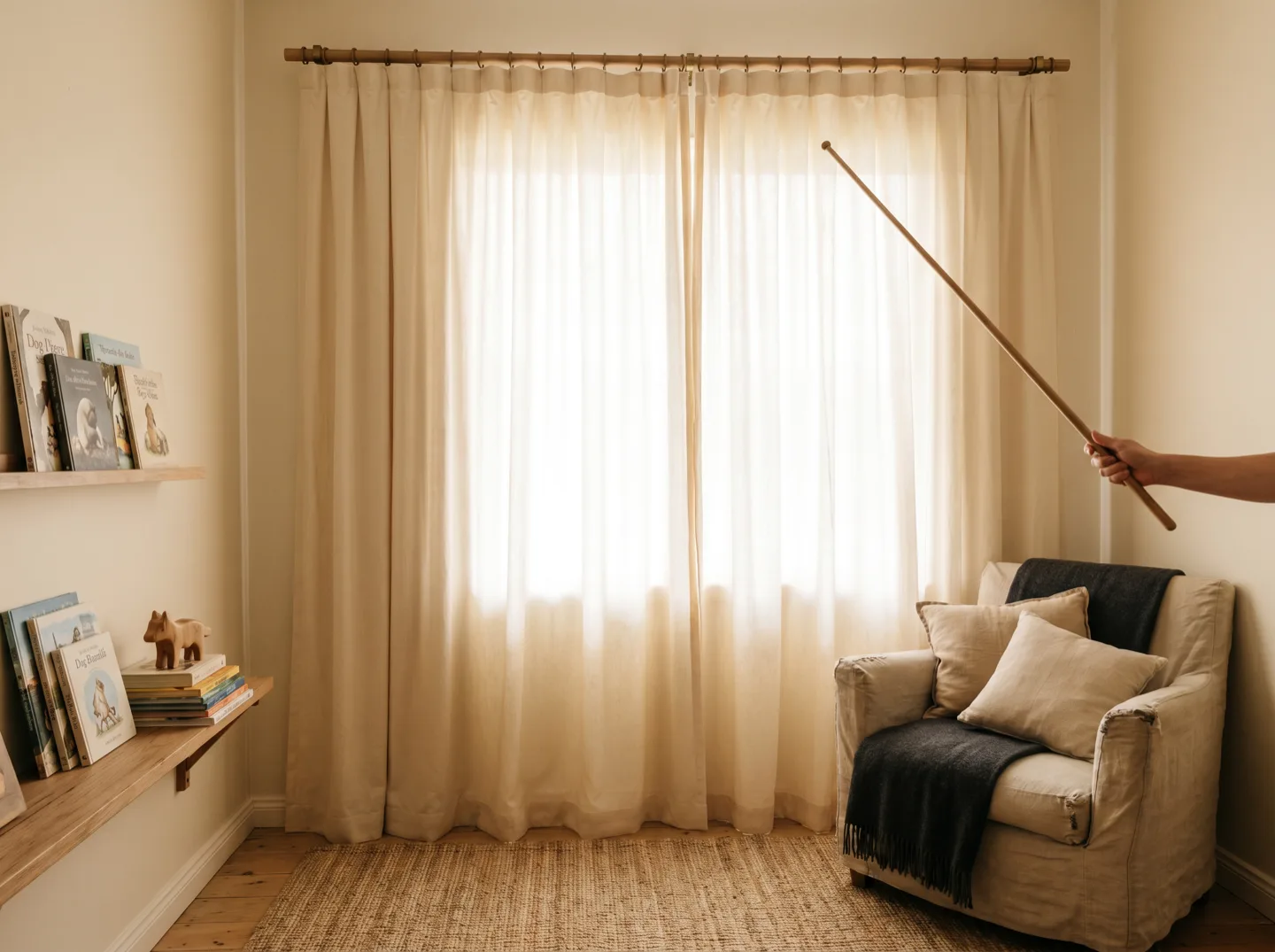
Where children are part of the household we will usually recommend designing the cord out entirely: hand-drawn or wand-drawn curtains, or motorisation where the budget stretches to it. Curtains are naturally one of the most child-friendly window coverings; a wand makes it complete.
Sources: ACCC Product Safety: blinds, curtains and window fittings mandatory standard · NSW Government: blind and curtain safety.
Choose the heading first, and the hardware chooses itself.