
Home · Guides · Thermal vs blockout curtains
Thermal vs blockout curtains: what a thermal lining does, and how to choose
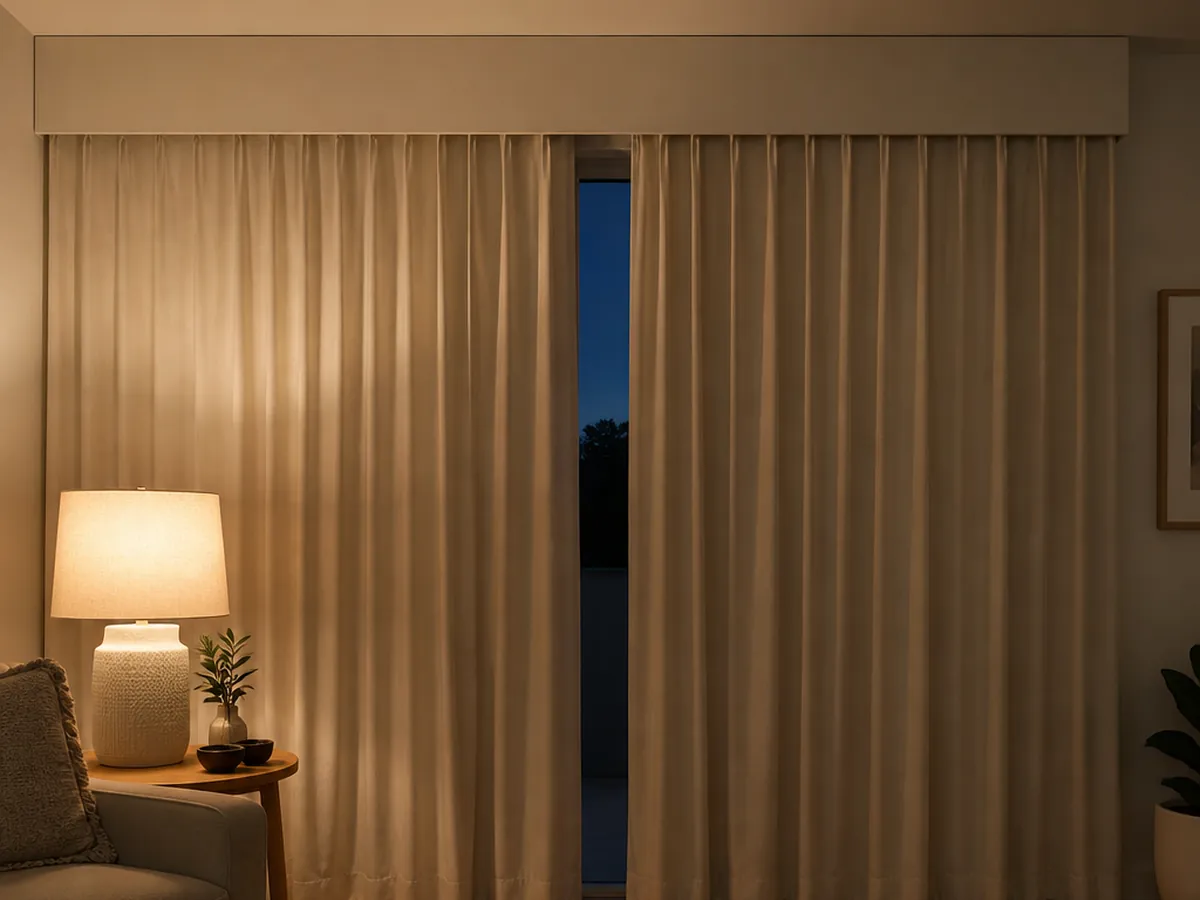
Thermal and blockout curtains largely overlap, because Australian heat advice asks for a lined curtain with a light-coloured block-out backing, and whether that curtain works depends on how it closes off the top, sides and floor of the window, with shade outside the glass coming first in summer.
Thermal and blockout curtains overlap more than the labels suggest. Australia's federal energy advice asks for curtains lined with a light-coloured "block out" backing "to prevent heat loss in winter and heat gain in summer". So the backing that darkens a room is the same one the heat advice names.
What decides whether a lined curtain does its job is how it hangs. We read four Australian guides side by side: the federal energy site, the ACT Government, CSIRO and Renew magazine.
All four ask for two things: a lined curtain, and something over the top of the window. Three of the four also want the curtain to reach the wall at each side and to reach the floor. The fourth asks for curtains that fall below the window. That count is ours, and the table below shows where each piece comes from.
The lining gets the attention in the shop. The cover over the top is the one fitting on every list beside it. A lined curtain with open air above the track is half the job.
What do thermal curtains need? Four guides compared
| What the guide asks for | Which guides ask for it |
|---|---|
| Lined or backed curtain | energy.gov.au, ACT Government, CSIRO, Renew (all four) |
| Top of the window covered (pelmet, or curtain dropped from the cornice) | energy.gov.au, ACT Government, CSIRO, Renew (all four) |
| Curtain reaches the wall at each side | energy.gov.au, ACT Government, Renew |
| Curtain reaches the floor | energy.gov.au, ACT Government, Renew (CSIRO asks for curtains that "fall below the window") |
| Tightly woven fabric | energy.gov.au, ACT Government |
Our count, from each guide's own page. Dots, left to right: energy.gov.au, ACT Government, CSIRO, Renew.
The federal energy site asks for "close-fitting lined curtains or blinds and pelmets". They should reach the floor and wrap to the wall either side of the window, in material that is tightly woven "to trap moving air".
The ACT Government gives the same fit rules. It adds that block-out backing "should be attached but not bonded", and it recommends box or corflute pelmets.
CSIRO's advice for older houses asks for heavy, lined curtains that fall below the window, with pelmets above windows and curtains "to stop warm air escaping".
Renew magazine's 2018 buyers' guide wants an enclosed pelmet or drop from the cornice. Its curtains touch the wall at each side and "just kiss the floor".
Read together, the guides spend most of their words on the gaps, not the fabric.
Thermal vs blockout: what's the difference?
In curtain making, "blockout" describes a lining that stops light coming through, and "thermal" a lining made to slow heat. The two overlap: the heat advice asks for a blockout backing, and a thermal lining stops most light too. The guides above describe construction and fit, not a label.
The heat advice itself asks for a light-coloured "block out" backing. So for most windows, the useful question is how the lining is built, not which word is on the ticket. Three things to ask:
- Is the backing light-coloured? The federal advice specifies a light-coloured "block out" backing.
- Is it a separate layer? The ACT advice says the backing should be "attached but not bonded". Our reading: sewn to the curtain rather than fused to the face fabric, which keeps one more layer for air.
- Is the face fabric tightly woven? Choose material "trapping air in as many layers as possible".
- 1Window glass
- 2Layer of still air next to the window (Renew)
- 3Light-coloured 'block out' backing (energy.gov.au)
- 4Attached but not bonded (ACT Government)
- 5Tightly woven, trapping air in as many layers as possible (ACT Government)
- 6The room
For which face fabric suits which room, our guide to material for curtains and the curtain fabric guide cover weight and light in detail. Lined styles are on the drapes and lined curtains page.
Do thermal curtains work?
They work on the weakest part of the house. The federal energy site says up to 40% of heating energy is lost through windows. CSIRO's figure has the same ceiling: "Uncovered windows account for up to 40 per cent of heat loss in the winter". In the other direction, almost 90% of a home's heat is gained through them.
A lined curtain works by holding air still. Renew's 2018 guide explains that snug, insulative curtains trap a layer of still air next to the window. A designer it quoted said multi-layered, tight-fitting curtains "can act like de-facto double glazing".
The same guide carried a caution. Thicker and blockout-backed fabrics add more thermal performance, it said, "though data on this isn't readily available". Curtains Newcastle's view: judge a curtain by its lining and how it is hung, and treat a precise heat claim on a swing tag with care.
Glass is a separate upgrade. Double glazing can reduce heat loss by up to 30%, but it means changing the window. Curtains are the option for the windows you already have: Your Home says window furnishings "are especially useful to add to existing windows".
Where does heat escape around a curtain?
A curtain with gaps can move heat the wrong way. Renew's 2018 guide describes what happens without a closed top, sides and floor: warm air rises to the top of the window and is drawn down behind the curtain. That sets up a current that cools the room and can increase condensation.
So close the three gaps:
- Top. Use a pelmet, or hang the curtain from the cornice. Our guide to curtain tracks, rods and pelmets shows the options.
- Sides. Bring the curtain back to the wall at each end, so air can't slip around the edge.
- Floor. Let the hem meet the floor. How curtains should fall covers lengths.
Then check the window itself. The ACT Government says to minimise air leaks around the window. The federal site lists the signs: rattling or whistling in wind, moving curtains, or a breeze near closed windows. Seal those gaps with foam strips or sealant.
How to use thermal curtains in summer
This summer looks set to test them. The Bureau of Meteorology's outlook issued 22 October 2026 put the chance of unusually hot days over 70% across eastern NSW for November to January. It put unusually high overnight minimum temperatures at over 80% chance for much of the country.
The routine is simple. In warmer months, close coverings during the day, then open them at sunset to let the evening breeze through.
Closed from morning through the day; opened at sunset “to let the evening breeze through”.
Open while the sun shines in; closed “when the sun goes to retain heat”.
Curtains closedCurtains open
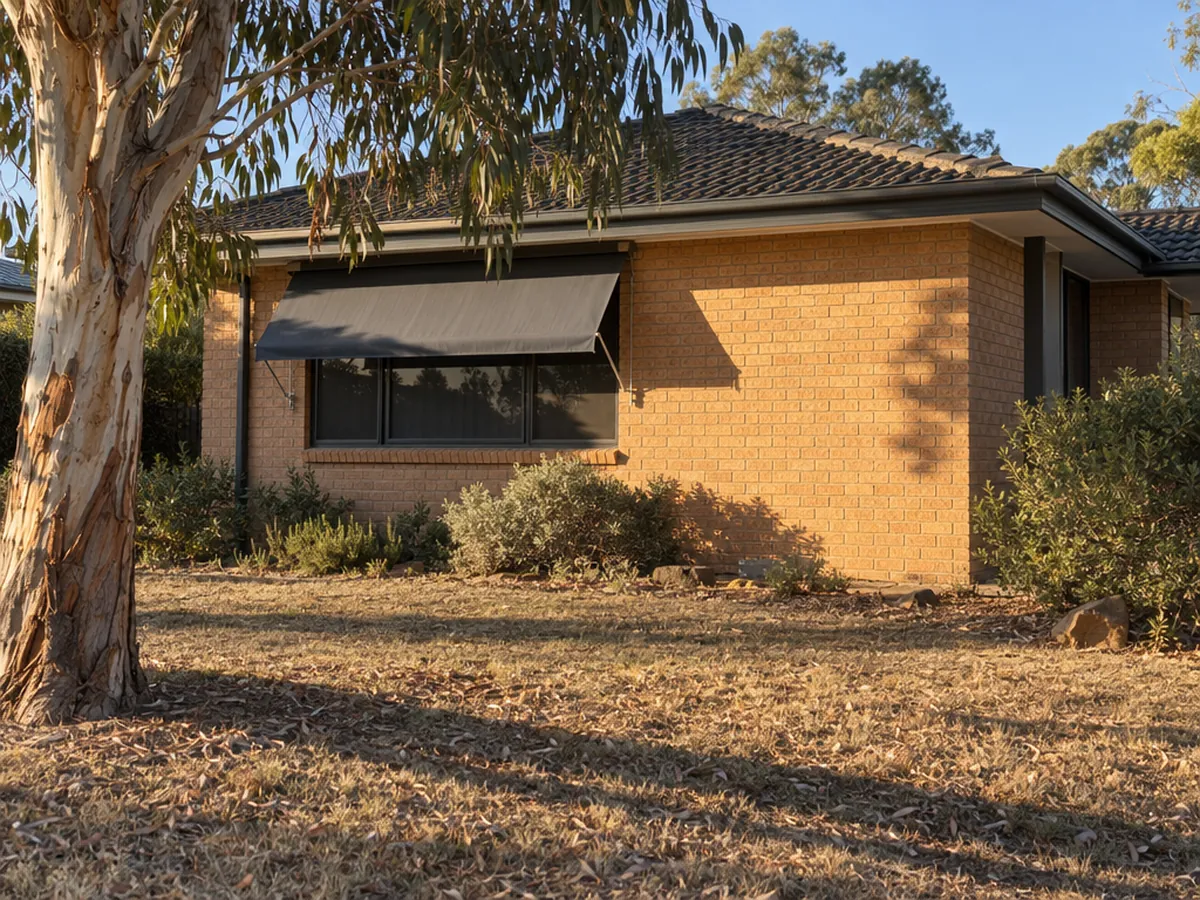
Lined curtains do not replace shading in summer: preventing sun from hitting the window in the first place "will have a much larger effect" than choosing better glass. Renew's 2018 guide sets the same order: if cutting summer heat gain is the main aim, keep the sun off the glass first, with an eave or awning.
For a Newcastle home with a west window in the afternoon sun, that means shade outside first. Then the curtain closes behind it as the inside layer.
In cooler months the habit reverses: open them by day when the sun shines in, and close them when the sun goes to retain heat. CSIRO says to do this especially on north and west-facing rooms. Our guide to when daylight saving ends walks through that changeover.
Which thermal curtains for which room?
| Room | What to consider | Source |
|---|---|---|
| Bedroom | Blockout-backed lined curtain; a darkened room from full blockout can feel gloomy by day, so consider a layer that lets some light in | Renew |
| Living room | A semi-transparent layer for privacy and glare, combined with heavy curtains for night-time heat retention | Renew |
| Apartment | Check strata by-laws first: some allow curtains only with white backing | Renew |
| North- and west-facing rooms, cooler months | Keep curtains open by day to warm the home | CSIRO |
| Any room taking hot summer sun | Keep the sun off the glass first, with an eave or awning | Renew |
Bedrooms. A blockout-backed lined curtain does the heat job and the dark job together. Renew's guide warns that a darkened room from full blockout can feel gloomy by day, so consider a layer that lets some light in. The day and night curtains page shows how two layers share a track.
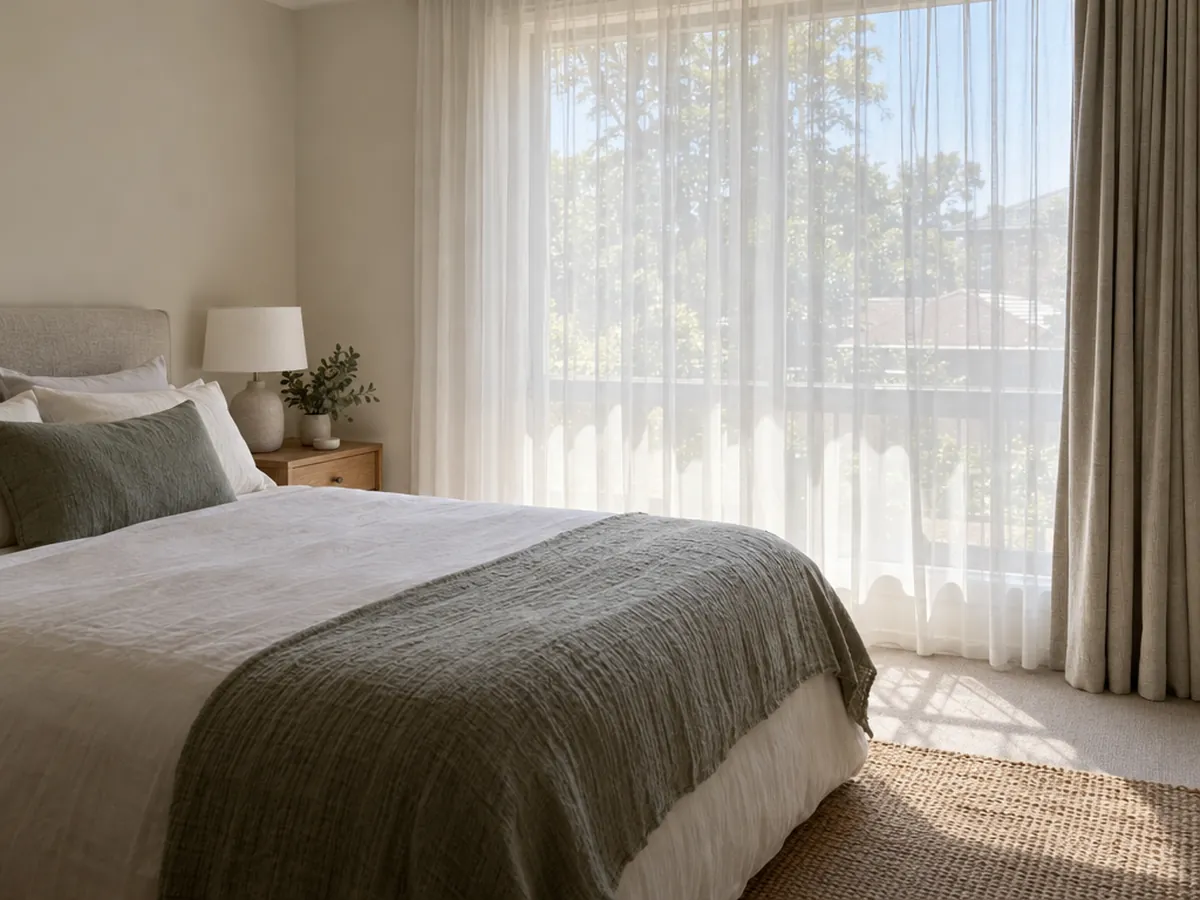
Living rooms. Renew notes that semi-transparent coverings suit privacy and glare and can be combined with heavy curtains for night-time heat retention. A sheer by day and a lined curtain at night is that pairing.
Apartments. Some strata by-laws restrict internal window furnishings, for example allowing curtains only with white backing. Read yours before you choose a lining colour.
Glass sliding doors. A thermal curtain for a door follows the same fit rules as one for a window. It also needs room to stack clear of the opening so the door slides freely. Types of curtain headings explains how each heading stacks.
If a blind suits the window better. Renew's 2018 guide found honeycomb blinds are good insulators if fitted snugly. Roller blinds are cheaper but less thermally effective, and vertical blinds and standard venetians help little. See Roman blinds and blinds for options.
Do corded thermal curtains need safety fittings?
Yes. Two national mandatory standards cover corded curtains and blinds, as the NSW Government sets out. A loose cord must not form a loop of 220 mm or longer at or below 1,600 mm above the floor, and a cleat must sit at least 1,600 mm above the floor. Continuous-loop pull-cords that cannot be cut need a safety device to secure the cords out of reach, and the installer must attach a label with their name and contact details.
- 1Cleat at least 1,600 mm above the floor
- 2No loop of 220 mm or longer at or below 1,600 mm
- 3Continuous loop: safety device to secure the cord out of reach
- 4Installer label: name and contact details
Thermal curtains at a glance
- Up to 40% of heating energy is lost through windowsenergy.gov.au
- Almost 90% of a home's heat is gained through themenergy.gov.au
- Lined with a light-coloured 'block out' backingenergy.gov.au
- Attached but not bondedACT Government
- Pelmet on top, wall at each side, floor at the hemenergy.gov.au · Renew
- Warmer months: close by day, open at sunset. Cooler months: open while the sun shines in, close when it goesenergy.gov.au
- Summer: keep the sun off the glass firstYour Home · Renew
- Corded curtains: no loose loop of 220 mm or longer at or below 1,600 mm above the floor, and the cleat at least 1,600 mm above the floorNSW Government
The window is where the heat moves. The lining slows it, the fit keeps it from slipping around the edges, and the habit of opening and closing does the rest.
Your next step
Stand at each window on a windy evening and check three places: the top of the track, the sides and the floor. Note which windows take the afternoon sun, and which already have an awning or eave. If you live in an apartment, check the by-laws on backing colour.
Then bring that list to Curtains Newcastle through our enquiry page, and ask about lining and fit for each window.
Sources
- https://www.energy.gov.au/households/windows
- https://www.climatechoices.act.gov.au/energy/energy-efficiency/window-glazing-or-treatments
- https://www.csiro.au/en/news/All/Articles/2022/June/energy-efficiency-older-houses
- https://renew.org.au/renew-magazine/buyers-guides/high-performance-curtains/
- https://www.yourhome.gov.au/passive-design/passive-cooling
- https://www.yourhome.gov.au/passive-design/glazing
- https://www.bom.gov.au/climate/ahead/outlooks/archive/20261022-outlook.shtml
- https://www.nsw.gov.au/legal-and-justice/consumer-rights-and-protection/safety/other-consumer-products/blind-and-curtain-safety
Pictures in this guide are illustrations, not photos of our jobs.